I have a confession to make: I fully expected to dislike this game. When the pre-marketing for Tomodachi Life: Living the Dream first started circulating, it gave off a slightly unsettling “stalker” vibe. Seeing promotional footage of people recreating their real-life school teachers, bosses, and neighbours in what looked like a “Mii-Sims” hybrid felt a bit voyeuristic for my tastes. I worried it would be a shallow exercise in digital puppetry. However, in true Nintendo fashion, I have been proven completely wrong. They rarely miss, and the finished product is a masterclass in charming absurdity that has somehow managed to consume my evening routine.
A Digital Island of My Own Making
Generally speaking, social simulators aren’t my primary genre. While they aren’t at the bottom of my list, I’ve never been one to sink hundreds of hours into something like The Sims. I usually prefer a game with a clear “win” state. Yet, here I am, daily checking in on my digital residents like a concerned landlord.
The core of the game involves overseeing a remote tropical island populated by Miis of your own creation. To test the limits of the social dynamics, I populated my island with a somewhat eclectic mix: myself, my wife, our two children, their grandparents, and… David Bowie. There is a specific kind of nonsensical joy that only this franchise can provide, such as watching the Thin White Duke share a virtual sandwich and a polite conversation about the weather with my mother-in-law. It is bizarre, it is pointless, and it is utterly brilliant.
The Beauty of the Absolute Sandbox
It is important to manage expectations regarding what this game is, and what it certainly is not. Unlike Animal Crossing or Pokémon Pokopia, there is no definitive end goal, no debt to pay off, and no overarching narrative progression. Your island is a sandbox in the purest, most chaotic sense.
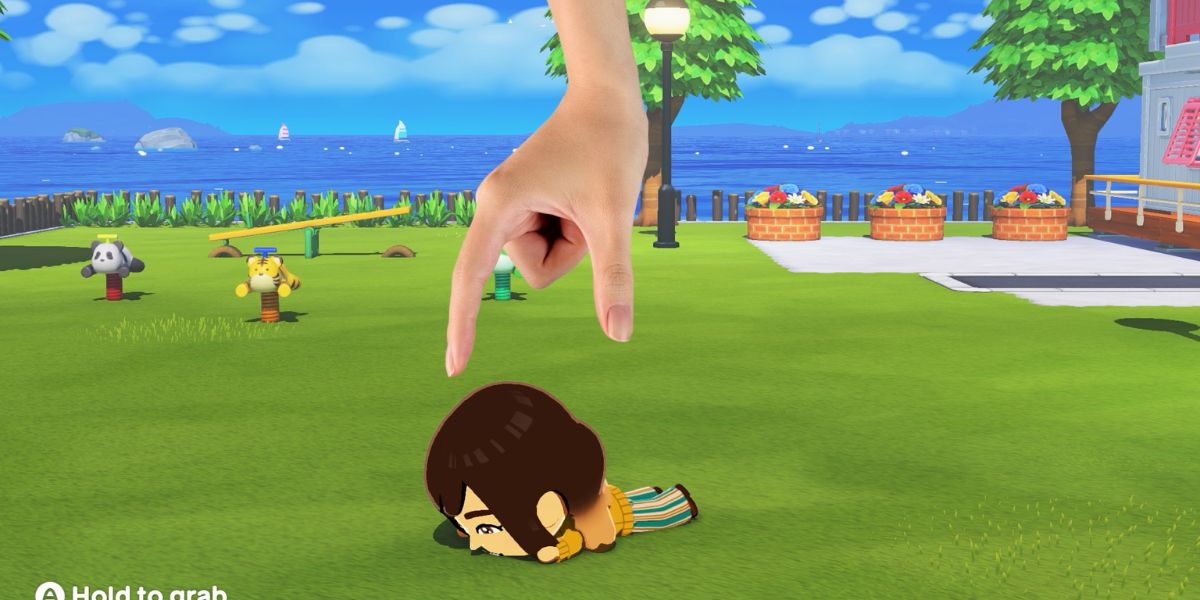
You are the architect of this chaos, tweaking everything from the clothes your residents wear to the literal terraformation of the land. Because the game puts you in a position of total authority, I decided to lean into the power trip. I had the residents refer to me exclusively as “Oh Great One.” There is something deeply satisfying about a digital version of your wifes father approaching you to ask for a new hat while addressing you with the reverence of a deity.
The customisation is frankly staggering. You can adjust voices (using a surprisingly robust synthesiser), personality quirks, and even the specific, often hilarious, way a Mii walks. I spent a solid amount of time deciding on a “catchphrase” for my digital self to start every conversation with. It turns out that having every interaction begin with a profound statement about the quality of the island’s fictional coffee never gets old.
Emergent Mayhem and Social Dynamics
The magic of Living the Dream happens in the unscripted moments. You plant the seeds by intervening in social situations. It might be suggesting a conversation topic for two Miis to discuss, like “Soccer” or “Dua Lipa” and then you just sit back and watch the relationship blossom (or spectacularly implode).
These interactions lead to a bizarrely entertaining web of romance, conflict, and friendship, think “Big Brother” but animated. The Miis will reference past events or conversations so if two Miis had a falling out over a misinterpreted comment about pop music, they might still be sulking about it when you log in two days later. It is amazing to witness the unknown drama that unfolds every time you open your console. Sometimes they’ll fall over or throw their back out, requiring you to step in and help, further cementing your status as the island’s benevolent (or slightly amused) guardian.
Polished Presentation on the Switch 2
Technically, the game runs brilliantly on the Switch 2. As the flagship hardware, you’d expect nothing less, but the presentation is truly top-notch. The art style feels like a high-definition evolution of the Miis we first met on the Wii, now bursting with vibrant colours, sophisticated shading, and that iconic charm.
While the game runs at 30 frames per second to maintain this high level of visual fidelity, it is a complete non-issue for this genre. You aren’t timing parries or lining up headshots; you’re watching a digital David Bowie perform a concert in a cat suit. The ability to zoom in and admire the finer details of your customised shops and houses makes the island feel like a tangible, living place rather than just a menu screen.
Everything you do contributes to the Wishing Fountain. This acts as the heart of the island’s progression. Once full, it grants a “Wish” that unlocks new items, shop inventory, or terraforming options. This creates a satisfying loop where even the smallest interaction (like giving a resident a glass of water or a P&J sandwich) feels like it’s contributing to the island’s growth.
The Final Verdict
Tomodachi Life: Living the Dream is unlike anything I’ve played before. While other games try to be funny through scripted jokes and written dialogue, this game allows humour to arise organically from the absurdity of the situations you create.
It won’t be for everyone, especially those who require a rigid quest log or a traditional “story” to stay engaged. However, there is clearly a massive market for games that prioritise creativity and digital dollhouse antics. I just didn’t realise that not only was I part of that demographic, but I would end up becoming a champion for it. If you’re looking for a break from the high-stakes intensity of modern gaming, your island is waiting.