
I fell in love with deck builders this year. If I look strictly at my time played and the satisfaction per dollar spent, Black Jacket has been my undisputed champion. It quickly became my go-to game for any downtime, completely rewiring how I look at roguelike mechanics. But once you catch the deck-building bug, you cannot help but search for the next great hit. So, I have been on the hunt for a new one, and along comes the Early Access release of a title called Shroom and Gloom.
Developed by Team Lazerbeam and published by Devolver Digital, Shroom and Gloom has been generating a lot of quiet buzz. It combines tactical card play with a bizarre, fungal-filled dungeon crawler experience. Naturally, I had to see if it could fill the void left by my previous obsessions. After spending considerable time lost in its subterranean tunnels, I am ready to share my thoughts on whether this quirky indie title deserves a spot in your digital library.
In Shroom and Gloom, the narrative is intentionally vague from the very beginning. You are not given a lengthy cinematic or a wall of text explaining your heroic destiny. Instead, you are dropped straight into a gloomy, foreboding underground world. You are trapped in dark, thorny tunnels filled with bones, overgrown vines, and an absolute abundance of hostile mushrooms. The singular goal is simple: you need to get out immediately.
The atmosphere is where the game makes its first strong impression. Rather than relying on washed-out greys or predictable gothic shadows to convey a sense of dread, the developers took a completely different route. The game features bold, vibrant tones that look more at home on a Saturday morning cartoon (do kids still watch on Saturday mornings?).
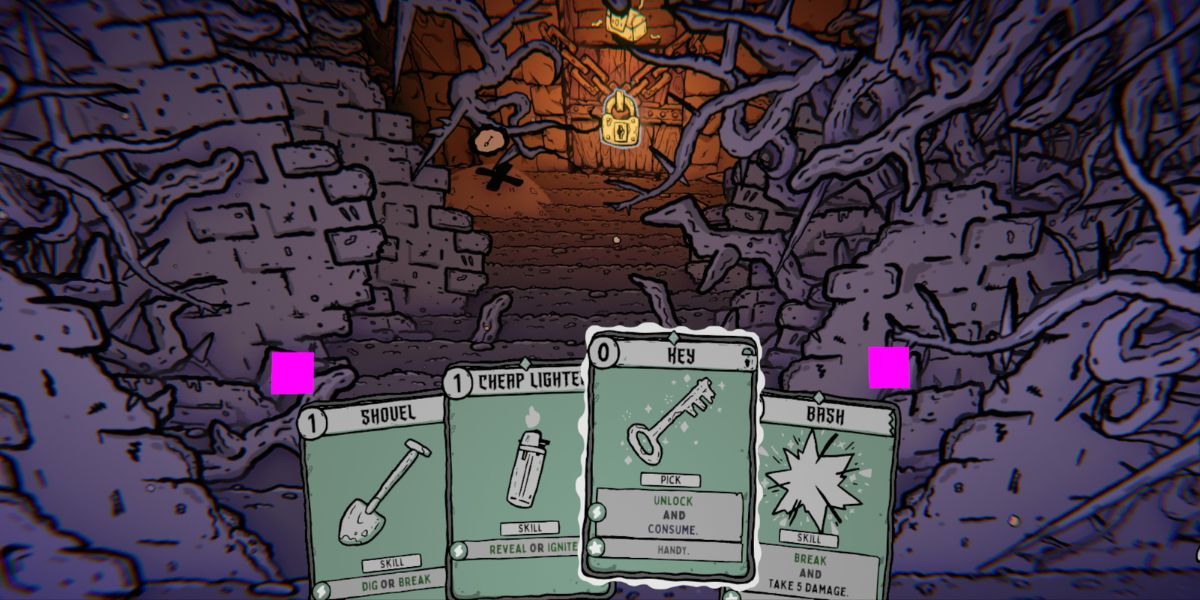
The creature designs are delightfully grotesque, reminiscent of classic Tim Burton films or the animated shows of the 1990s. The hand-drawn visual style is layered in a way that creates a convincing three-dimensional tunnel effect as you navigate from room to room. This is a visually striking contrast, the environment feels suffocating and hopeless, yet the vibrant art style keeps you engaged and curious about what lies around the next corner.

How It Actually Works
Most roguelike deckbuilders hand you a single stack of cards and tell you to make the best of it. Shroom and Gloom is a bit different with the formula by introducing a two-deck system. If you are not a fan of managing cards, having to juggle two entirely separate decks might sound daunting, but it is implemented with a clear purpose.
The first deck is solely for exploration. As you navigate the dungeon, you move from room to room. In these exploration phases, you use cards like shovels to dig up hidden items, lighters to start campfires, and heavy tools to break through locked doors. You have a limited pool of stamina, meaning you cannot just dig up every dirt pile and smash every chest you find. You have to make calculated choices. If you use all your stamina hunting for treasure, you might not have enough left to break the lock on the exit door.

When this happens, you are forced to take a rest. However, resting in a gloomy fungal forest is rarely a positive experience. Campsites are dangerous, and you will often take damage just for trying to catch your breath and draw a new hand of cards. You can light fires or clear away debris to help with this, but the risk-reward calculation is constant. Do you push forward with low health, or rest and guarantee you take a small amount of damage?

The second deck comes into play when you encounter enemies. This is your traditional combat deck, filled with attacks, defensive manoeuvres, and healing items that feels reminicent of classic D&D pc games. But again, Shroom and Gloom adds a wonderful thematic twist. Because your enemies are giant mushrooms, you are not just slashing them with swords. You are cooking them. You can play cards that add spices or hot sauce to the enemies, and then follow up with a flambé card to deal massive damage. You can even use cards that allow your character to take a bite out of the fungi for health. The synergy here is clever, engaging, and highly thematic.
What It Does Well:
The absolute highlight of Shroom and Gloom is the combat synergy. Once you grasp the mechanics, setting up a combination of culinary attacks is incredibly satisfying. Stacking hot sauce on a group of enemies and then setting them on fire clears the board quickly and makes you feel like a tactical genius.
Additionally, the art style cannot be overstated. The hand-drawn aesthetic gives the game a unique identity that stands out in a crowded genre. Even when you are defeated, the failure screen feels less punishing because you get to admire the intricate artwork. This was also a feature that drew me to “Black Jacket” and why I never really got the hype of “Balatro”.
From a hardware perspective, the game plays surprisingly well on portable devices. I played on Steam Deck and the Lenovo Legion Go and the game translates beautifully to a smaller screen and controller inputs, making it an excellent companion for travel or lounging on the couch. This also meant that the transition to a bigger screen playing with a Steam Controller was extremely seemless.
What It Does Not Do Well: It is important to remember that Shroom and Gloom is an Early Access title, and it comes with a few growing pains. There are occasional bugs, which is to be expected, I would suggest to take that into consideration but don’t let it scare you away as it’s important to jump into a game like this at ground level and be a part of the solution as they develop it further.
The Comparison: Who Is This For?
If you enjoy the tight, calculated card mechanics of Slay the Spire but wish it had the dark, quirky aesthetic of something like Cult of the Lamb, this game is built for you. It appeals directly to players who appreciate tactical thinking, resource management, and a distinct visual flair. It is also perfect for gamers who prefer titles they can pick up for an hour a day without needing to memorise complex, overarching narratives.
Final Verdict (Early Access)
Shroom and Gloom takes a familiar genre and injects it with a fresh dose of personality and mechanical innovation. The dual-deck system forces you to think critically both in and out of combat, while the bizarre, culinary-themed battles provide a highly entertaining loop. While it currently suffers from a few Early Access performance hiccups there is no doubt that the foundation here is exceptionally strong. The art direction alone makes it worth experiencing.
Highly Recommended.